 Just Clean
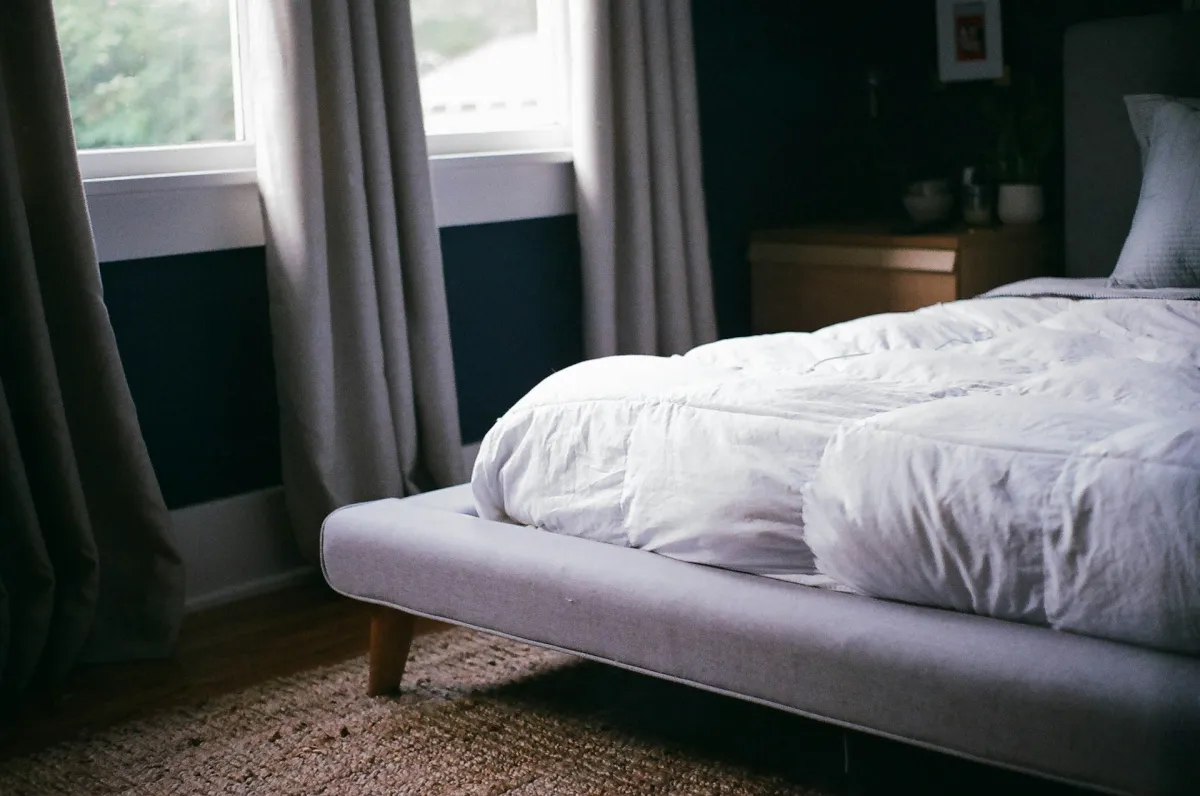
Many people search for «cleaning a mattress with baking soda», because baking soda is considered the simplest remedy against odours. In practice, baking soda, vinegar or baking powder really do work, but sometimes home remedies even make the stain worse. Especially with urine, sweat or older discolouration, a closer look pays off. This guide shows honestly, for every common home remedy, what it can do, which mistakes ruin the fibre, and when even the best DIY method is no longer enough.
From our practice: We regularly clean mattresses in Swiss households and businesses and often see the same mistakes, too much water, the wrong home remedies on delicate materials, steam cleaners on boxsprings. This guide is based on our hands-on experience: what works for which mattress type and what causes damage.
💬 Which home remedies really help?
- ✅ Baking soda, binds odour and moisture (on the surface)
- ✅ Baking powder, like baking soda (same main ingredient)
- ⚠️ Vinegar (diluted), only for certain stains, carefully
- ⚠️ Steam cleaner, only if the manufacturer expressly allows it
- ✅ Sunlight & airing, UV reduces mites on the surface
None of these methods reaches the deeper foam or spring-core layers.
Unsure whether home remedies are still enough for your mattress?
Send a photo, we tell you honestly whether DIY still makes sense or whether a professional deep cleaning is the better way.
💬 Send a photo & get an honest assessment 📞 +41 79 522 29 19
⚠️ Important: never too much water on the mattress.
A mattress dries in 8–10 hours at normal room temperature, if it gets too wet inside, mould can form that is later almost impossible to remove. Better less liquid, more dabbing, more patience.
In this guide
- Baking soda, the classic
- Baking powder, like baking soda, small differences
- Vinegar, when it helps, when it causes damage
- Steam cleaner, risky, but sometimes allowed
- Sunlight and airing
- Special cases: urine, blood, sweat, wine
- 5 most common mistakes
- When home remedies are no longer enough
- Frequently asked questions
Cleaning a mattress with baking soda
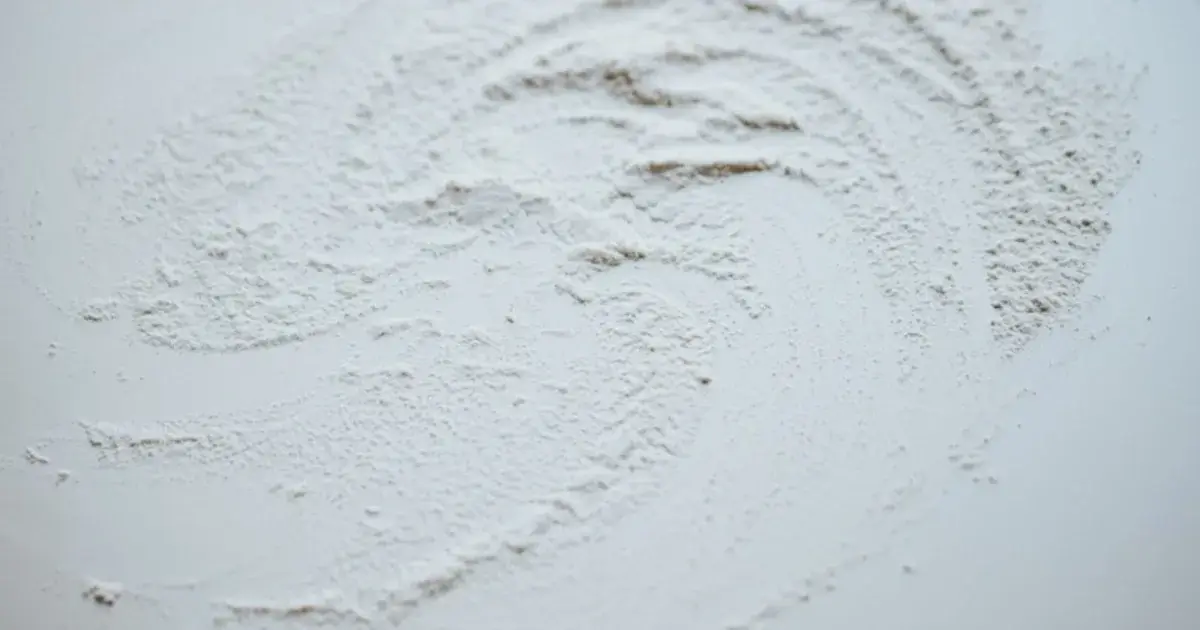
Effect: Baking soda (sodium bicarbonate) binds odours and some moisture. It is the best-known home remedy for mattresses and the sensible first step for light soiling or odour problems.
Step by step:
- Remove the cover and wash at 60 °C (if removable)
- Vacuum the mattress surface thoroughly, ideally with a HEPA filter (at least H13)
- Apply baking soda generously, about 1 packet (50 g) per 1 m²
- Let it work for at least 6–8 hours (overnight is ideal). For strong odours: 12–24 hours
- Vacuum the baking soda off completely (a HEPA filter is important)
- Air the mattress before putting the cover back on
What baking soda can do: bind sweat and moisture odours, absorb surface moisture traces, lightly refresh between professional cleanings.
What baking soda does NOT do: reach dust mites in deeper layers, fully remove dried-in stains, reduce the allergen load in the foam core.
Cleaning a mattress with baking powder
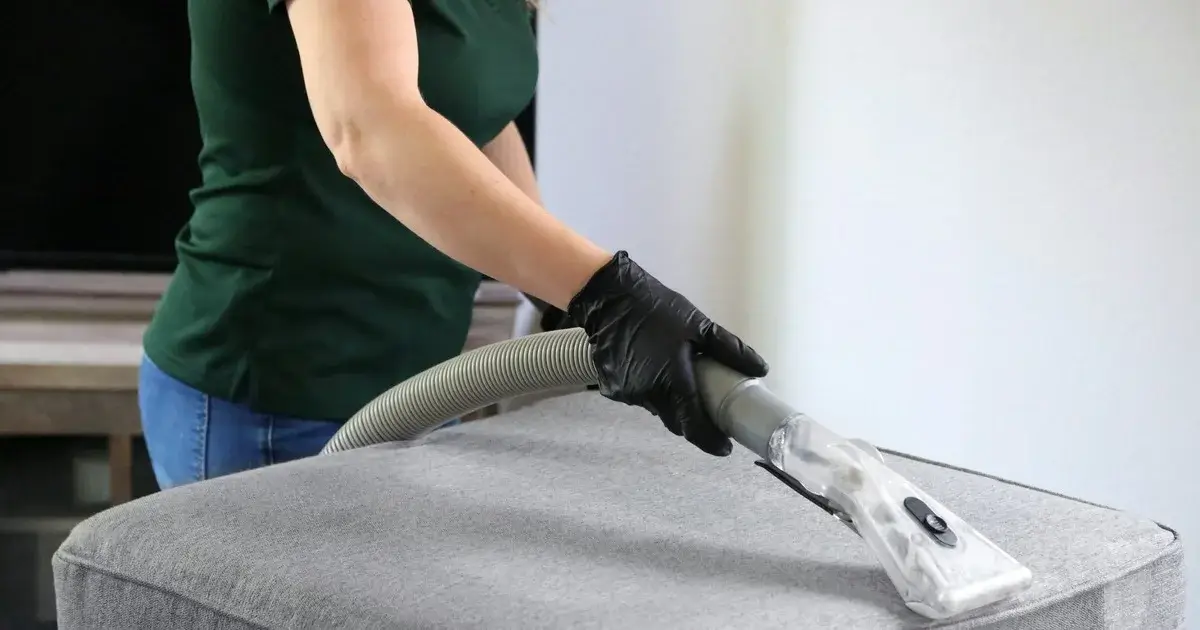
Baking powder and pure baking soda are very similar, both have sodium bicarbonate as the main ingredient. Baking powder also contains acid (cream of tartar) and starch.
For use on a mattress: pure baking soda is usually the better choice, no additional ingredients, cheaper in large packs. Baking powder works similarly but can leave slight shadows on white covers if the starch is not completely vacuumed off.
The step-by-step application is identical to the baking-soda method.
Cleaning a mattress with vinegar (carefully)
Vinegar is recommended in many home-remedy lists, but for mattresses it is much more critical than for a fabric sofa or carpet.
When vinegar can help:
- Light urine stains as a stopgap, a diluted vinegar-water mixture neutralises alkaline urine
- Musty smell from moisture, very diluted, spot-treated
When vinegar is the wrong way:
- Coloured or printed covers, can fade
- Delicate materials such as visco-memory or latex
- Dried-in urine older than 24 hours, the smell can intensify
- Neat, undiluted, damages almost any mattress cover
Application (if at all): dilute white household vinegar with water 1:1, dab sparingly with a light cloth, do not pour, do not rub. 10–15 minutes, then dab with clean water, dab dry, air for 8–10 hours.
Steam cleaner: only with manufacturer approval
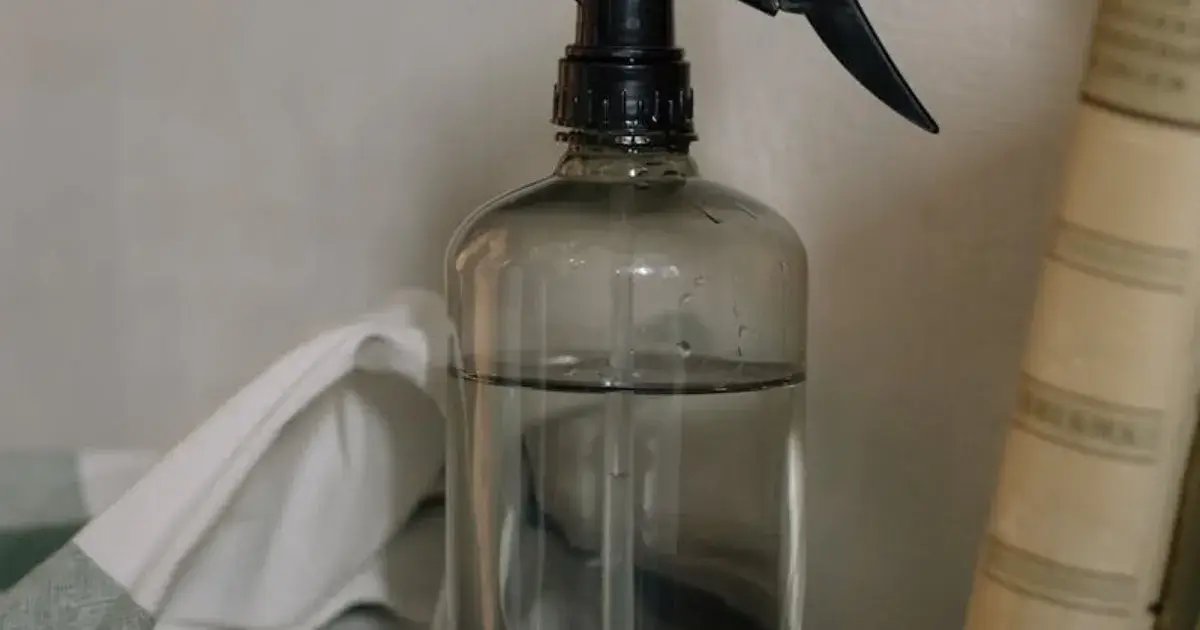
Hot steam sounds like the ideal solution, but on mattresses it is risky:
- Too much moisture in the core, drying time 24–48 h, mould risk
- Heat fixes protein stains (urine, blood, sweat) permanently
- Visco-memory and latex only tolerate heat to a limited extent
- Boxspring and spring core can rust inside with moisture or loosen glued layers
When a steam cleaner can be allowed: the manufacturer expressly permits it, a pure foam mattress without a delicate cover, a short application with perfect ventilation afterwards.
Check the care label, low steam level, nozzle at least 5 cm away, even (not spot-treated), dry for 24 hours with the window open. If unsure: better a professional mattress cleaning with controlled moisture.
Sunlight and airing
The simplest and free method, evidence suggests UV light reduces dust mites on the surface. The effect, however, remains limited to the top few millimetres; deeper layers of the mattress stay untouched.
What you can do:
- On a sunny day, place the mattress on the balcony or terrace, both sides for 2–4 hours each, turning every 1–2 hours
- While airing, beat it lightly (during the Swiss pollen season a mask is recommended)
- Check it is completely dry before bringing it back in
- Daily routine: fold back the duvet after getting up, air the mattress for 30 minutes
- Air the room 2–3 times a day (window fully open, 5 minutes)
- Keep humidity below 50% (hygrometer approx. 15 CHF)
More details in the frequency guide for upholstery and mattresses.
Special cases: urine, blood, sweat, wine
Short rules of thumb per stain type, full instructions in the linked guides.
Urine stains (children, seniors, pets): immediately absorb plenty of liquid (do not rub), a diluted vinegar-water mixture 1:1 OR an enzyme cleaner, then let baking soda work for 8 h and vacuum. For urine that has penetrated deep into the foam core: deep extraction with enzyme treatment, the method is the same as for upholstered furniture, see removing pet urine from upholstery (most steps apply 1:1 to mattresses too).
Blood: only cold water (warm fixes protein), dab from the outside inwards, change the cloth often. Fresh: high success rate. Dried-in: hardly removable with home remedies.
Sweat stains: a baking-soda-water-dish-soap mixture, let work for 30 min, dab off, clean water, dry. With years-old sweat stains a shadow often remains, a professional deep cleaning reduces it significantly.
Red wine: immediately put salt or baking soda on the damp stain, 15 min, vacuum, dab with a diluted dish-soap solution. Step by step for 5 stain types in the stain guide (the principle is the same for mattresses).
The 5 most common mistakes in mattress DIY
- Too much water, extends drying to 24–48 h, mould risk
- Hot water on protein stains (blood, urine, sweat), fixes them permanently
- Rubbing instead of dabbing, pushes dirt deeper into the fibre
- Aggressive home remedies on coloured covers (bleach, hydrogen peroxide, neat vinegar), discolour permanently
- Washing the cover warm without pre-treatment, sweat stains get fixed in the dryer
When home remedies are no longer enough
Home remedies are a good first step, but in these situations they are the wrong way:
- A confirmed dust-mite allergy, home remedies do not reach the allergen load in deeper layers. More in the guide on dust mites in the mattress
- A mattress never professionally cleaned for years
- Repeated pet urine or bed-wetting over a longer period
- A dried-in smell that returns with heat or moisture
- Asthma or eczema that worsens while sleeping
- Before a flat handover of a rented apartment
- Several unsuccessful DIY attempts, further attempts increase the risk of lasting damage
In these cases it is worth switching directly to a professional mattress cleaning with deep extraction.
Frequently asked questions about mattresses and home remedies
Which home remedy is best for the mattress?
Baking soda is the all-rounder, it binds odour and moisture, is cheap and material-friendly. For a light refresh between professional cleanings it is usually the best choice.
How long does baking soda need to work on the mattress?
At least 6–8 hours, ideally overnight. For strong odours up to 24 hours. Then vacuum thoroughly with a HEPA filter.
Can you clean a mattress with vinegar?
Yes, but carefully and only diluted (1:1 with water). Only on white or colourfast covers, never neat, never on visco-memory or latex.
Does sunlight help against dust mites in the mattress?
On the surface yes, in deeper layers no. UV light only reaches the top few millimetres. Useful as a routine every few months, but it does not replace a deep cleaning.
How often should you clean a mattress with home remedies?
Wash the cover weekly at 60 °C. Baking-soda treatment every 1–3 months. Home remedies do not replace a professional deep cleaning, see our frequency guide.
Is a steam cleaner enough for the mattress?
Only if the manufacturer expressly allows it, and even then with caution. Risk: mould, fixed protein stains, material damage on visco-memory or boxspring.
Does baking soda help against dust mites?
To a limited extent. Baking soda binds surface moisture that mites need to reproduce, slightly slowing the population. It does not reach living mites in deeper layers. For allergy sufferers, a professional deep cleaning is far more effective.
How do I remove urine stains with home remedies?
Immediately absorb plenty of liquid, use a diluted vinegar-water mixture or enzyme cleaner, then let baking soda work for 8 h and vacuum. For deeply penetrated urine, home remedies are usually not enough, deep extraction is the most honest solution.
Mattress cleaning in your region (Switzerland)
Just Clean KLG works on site in Lucerne, Zürich, Zug, St. Gallen, Basel, Bern as well as in the cantons of Aargau, Schwyz, Nidwalden, Obwalden, Solothurn. A binding fixed price after a photo assessment.
Home remedies no longer enough? Send us a photo
If the smell returns despite baking soda, dried-in stains remain or allergy symptoms during sleep do not improve, a professional deep cleaning is the most honest solution. A photo via WhatsApp, a binding fixed-price quote in 1–2 hours, appointments often within 24–72 hours.
- 📞 Call: +41 79 522 29 19
- 💬 WhatsApp: Send a photo & start a chat
More from our guide: