 Just Clean
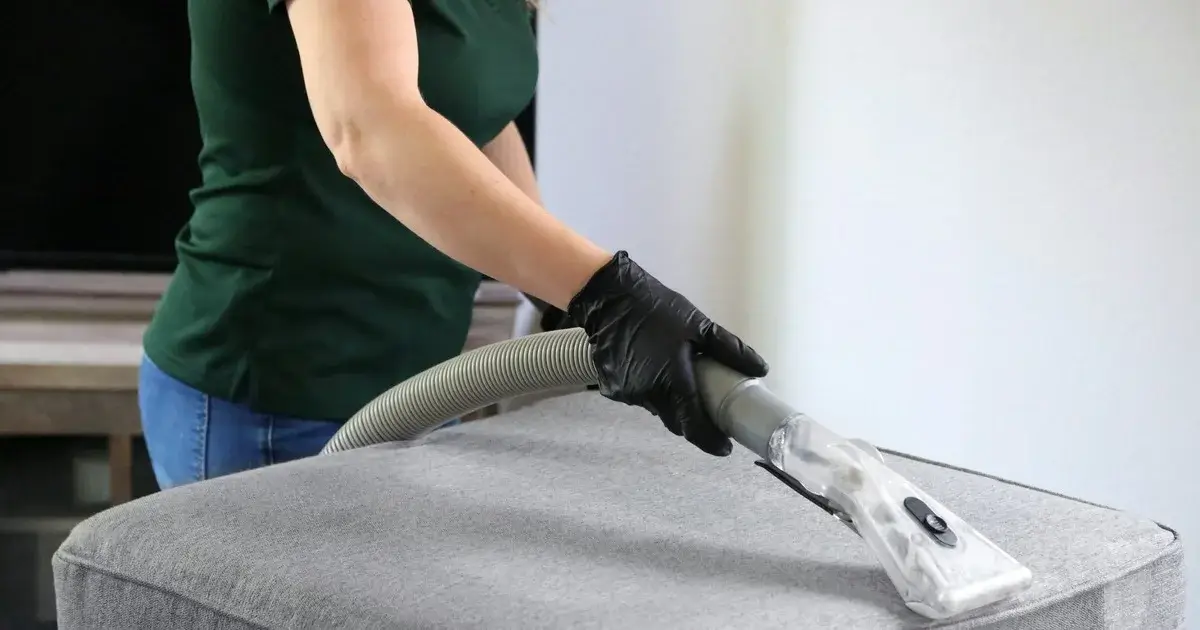
How often should a sofa and mattress be professionally cleaned in a Swiss household? The honest answer: it depends, on the household profile, material, allergies and use. For many Swiss households, a sensible sofa cleaning is roughly every 12–24 months. This guide shows how to determine the frequency that makes sense for your household, when an additional cleaning is worthwhile and which routine care in between really extends the lifespan of your upholstered furniture.
💬 In short, recommended frequency (Switzerland)
- Sofa, standard household: every 18–24 months
- Sofa, household with children: every 12 months
- Sofa, household with pets: every 6–12 months
- Mattress, without allergy: every 24–36 months
- Mattress, with dust-mite allergy: every 6–12 months
- Mattress, with asthma or eczema: every 12 months
Between professional appointments: vacuum weekly, act immediately on stains.
Cleaning frequency by household at a glance
| Household | Sofa | Mattress |
|---|---|---|
| Standard household | 18–24 months | 24–36 months |
| Children in the household | 12 months | 12–24 months |
| Pets (dog/cat) | 6–12 months | 12–24 months |
| Allergy sufferers (dust mites) | 6–12 months | 6–12 months |
| Asthma or eczema | 12 months | 12 months |
| High-quality sofa (2,000+ CHF) | 12–18 months | n/a |
Unsure which interval makes sense for your household?
Send a photo via WhatsApp, we tell you honestly whether your sofa or mattress already needs a cleaning.
ℹ️ Good to know
Many sofas and mattresses are only vacuumed for years. Over time, however, deeper-seated soiling, odours and allergens accumulate that are much harder to remove later. Regular deep cleaning is therefore value retention, not repair.
In this guide
- How often to professionally clean a sofa?
- How often to professionally clean a mattress?
- Does your sofa or mattress already need cleaning?, 6-point self-test
- Why the Swiss living climate is a factor
- Routine care between professional appointments
- The 5 most common upholstery-care mistakes
- When an additional cleaning makes sense
- What does a professional upholstery cleaning cost?
- Upholstery cleaning in your region (Switzerland)
- Frequently asked questions about cleaning frequency
How often to professionally clean a sofa?
The right frequency depends on the household profile. A quick overview:
📌 Quick rule for sofas
- light use → 18–24 months
- children in the household → 12 months
- pets (dog/cat) → 6–12 months
- allergy or asthma → 6–12 months
- high-quality designer sofa → 12–18 months (value retention)
These rules of thumb cover the most common situations, in detail:
- Single or couple household without children and pets: every 18–24 months. Deep cleaning ensures hygienic freshness and preserves the value of the furniture.
- Family with children: every 12 months. Children bring crumbs, stains, more movement, the upholstery collects significantly more dirt.
- Household with a dog or cat: every 6–12 months. Pet hair, skin flakes, odour particles and occasional accidents (pet urine, vomit) require more frequent professional treatment. With several animals or large dogs: rather shorter.
- Allergy sufferers or asthma in the household: every 6–12 months, ideally before the heating season (September/October). The Swiss Allergy Centre aha! recommends regular deep cleaning of upholstered furniture.
- High-quality designer or brand sofa (2,000+ CHF): every 12–18 months for value retention. A cleaning usually costs less than 10% of the new price and extends the lifespan by several years.
- Before moving out or a flat handover: once, regardless of the last appointment, the landlord often expects hygienic cleanliness.
A quick rule of thumb for any household: if you remember that the last cleaning was «more than 2 years ago», then it's time.
How often to professionally clean a mattress?
For the mattress, allergy and sleeping habits are decisive:
- Adult sleeper without allergy: deep cleaning every 24–36 months. In between, wash the cover weekly at 60 °C.
- With a dust-mite allergy: professional deep extraction every 6–12 months. New mites settle again over time, regular cleaning keeps the allergen load low. More in our guide dust mites in the mattress.
- With asthma or eczema: every 12 months.
- Children's and baby mattresses: every 12 months, more often with frequent accidents. Deeper vacuuming removes crumbs, sweat and any urine residues from the foam core.
- Guest room or rarely used: every 36 months or before expected guests.
- After illness, longer bed rest or when taking over a used mattress: once, as the occasion requires.
Important: everyday measures such as encasings, regular airing and a hygrometer (humidity below 50%) reduce the mite population in the upper layers, but they do not replace deep extraction.
Does your sofa or mattress already need cleaning?
🔍 6-point self-test
- Stains remain visible despite cleaning attempts
- An odour returns with heat or moisture
- Pets regularly sleep on the furniture
- The last professional cleaning was more than 2 years ago
- Allergy, asthma or eczema in the household
- The sofa looks dull, dark or smells musty
Ticked «yes» at least twice? → A professional deep cleaning makes sense now.
Why the Swiss living climate is a factor
The Swiss living climate influences how quickly dirt and allergens accumulate in upholstery, and thus the ideal cleaning frequency.
Winter (October–April)
- more dust from dry heating air
- less airing, allergens stay in the room
- static charge, pet hair and skin flakes cling more strongly
Summer
- more sweat in the mattress
- suncream and skin-grease residues in the sofa cover
- pollen and street dust through open windows
Good times to book: spring (before the pollen season) or autumn (before the heating season). In damp rooms (ground floor, old buildings, poorly ventilated bedrooms), go for the shorter variant of the interval.
Routine care between professional appointments
What you can do yourself to keep the furniture clean between professional cleanings:
Weekly
- Vacuum the sofa and mattress with an upholstery nozzle (HEPA filter, at least filter class H13)
- Wash bedding at 60 °C
- Plump cushions, turn the seat cushions
Monthly
- Wash the mattress cover, if removable, at 60 °C
- Check sofa covers, if washable, and wash if needed
- Air the room after getting up, fold back the duvet, reduces moisture in the mattress
As needed
- Dab fresh stains immediately, do not rub, see removing stains from the sofa
- For pet urine: act immediately, see pet urine on the sofa
- With visible soiling: no aggressive home remedies without a material test
This routine care significantly extends the time until the next professional cleaning, but it does not replace it.
The 5 most common upholstery-care mistakes
These five mistakes are the ones we see most often in customer enquiries:
- Waiting too long. Anyone who does nothing for 5+ years risks damage that can hardly be fully fixed with a single cleaning.
- Overestimating routine care. Weekly vacuuming only removes surface dust, mites, allergens and deep-seated dirt stay in the upholstery.
- Rubbing instead of dabbing on stains. Pushes dirt deeper into the fabric and damages the fibre.
- Aggressive home remedies such as bleach, neat vinegar or all-purpose cleaners without a material test. They leave watermarks, discolouration or fibre damage.
- Cleaning only when something is visible. Dust mites, sweat and allergens are invisible, anyone who waits for visible signs is usually already late.
When an additional cleaning between intervals makes sense
Even if the regular appointment is not yet due, in these situations an unscheduled cleaning is advisable:
- A visible, dried-in stain (older than 48 hours)
- An odour problem that returns with heat or moisture
- Pet urine inside the upholstery, the sooner, the higher the chance of complete removal
- After a longer illness in the household
- Worsening of allergy or asthma symptoms without another obvious cause
- Before important occasions, a flat handover or a house sale
- After a move into a furnished flat or when taking over a used mattress
What does a professional upholstery cleaning cost?
Typical 2026 market prices in Switzerland:
- Sofa 2-seater: usually 150–200 CHF
- Sofa 3-seater: usually 180–250 CHF
- Corner sofa: usually 250–400 CHF
- Mattress: usually 90–150 CHF
- Surcharges for pet urine, heavy soiling or delicate fabrics: +30–80 CHF
At Just Clean KLG the price is confirmed bindingly after a photo assessment, with no surprises on site. Detailed price ranges and factors in our cost guide Upholstery cleaning Switzerland 2026.
💡 Replace a 2,500 CHF sofa, or maintain it for ~200 CHF?
A deep clean every 12–18 months costs less than 10% of the price of a comparable new sofa. Anyone who uses a good sofa for 8 instead of 5 years has already saved more with two cleanings than they cost. For high-quality sofas, professional cleaning is often far more worthwhile than an early replacement.
Upholstery cleaning in your region (Switzerland)
Just Clean KLG works on site at the customer's place across German-speaking Switzerland. Travel and the material check are free. Our service area covers 11 cantons, including:
- Zürich
- Lucerne, Central Switzerland
- Zug
- Basel
- Bern
- St. Gallen, Eastern Switzerland
- Further cantons in German-speaking Switzerland on request (Solothurn, Aargau, Obwalden, Nidwalden, Schwyz)
Frequently asked questions about cleaning frequency
How often should you have a sofa professionally cleaned?
For standard households every 18–24 months, with children every 12, with pets every 6–12, for allergy sufferers every 6–12. Before a flat handover or with visible soiling, as needed.
How often should you have a mattress professionally cleaned?
Without an allergy every 24–36 months, with a dust-mite allergy every 6–12 months, with asthma or eczema every 12 months. For children's mattresses yearly.
Isn't it enough to just vacuum regularly?
No, vacuuming only removes surface dust. Mites, allergens, sweat residues, dried-in dirt and deep-seated odours sit in deeper upholstery layers and are only reached with deep extraction.
What happens if you do nothing for years?
Dirt, skin flakes, pet hair, mite residues, allergens and sweat accumulate. After 5+ years without cleaning, these deposits often can no longer be fully removed with a single deep clean. For allergy sufferers, symptoms can worsen significantly.
Is a yearly cleaning mandatory?
Not mandatory, but highly recommended for many household profiles (children, pets, allergy). Anyone who goes for the longest sensible interval risks odour and hygiene problems over time.
When is a professional cleaning worth it instead of buying new?
For sofas in the 2,000+ CHF range, regular cleaning is almost always worthwhile, it costs less than 10% of the new price and extends the lifespan by years. For very cheap, old furniture (residual value under 300 CHF) a new purchase can be the better choice.
Which season is best for cleaning?
Spring (before the pollen season) and autumn (before the heating season) are ideal. In summer the upholstery dries faster with open windows; in winter appointments are often available sooner.
How long is the sofa unusable after cleaning?
8–10 hours of drying time. A morning appointment means the sofa is ready to use again in the evening.
How long does a professional cleaning on site take?
Usually 1–2 hours on site, depending on furniture size and degree of soiling. A 2-seater is often done in 60 minutes; a large corner sofa with stubborn stains can take 2–3 hours. You don't have to be there all day, many customers open the door, let us work and are back in charge after 1–2 hours.
Can you clean a sofa too often?
No, with professional, material-appropriate deep cleaning, normally not. Problems arise rather from incorrect DIY cleaning (too much water, wrong cleaner, mechanical rubbing), which ages the material faster. Professional extraction with fibre-friendly agents, on the other hand, cleans the furniture without stressing it.
How do you tell that a sofa should be cleaned?
Typical signs: visible discolouration or dark seating areas, a musty or unpleasant smell (especially with heat), visibly stiff upholstery spots from dirt, allergy symptoms without another cause, or simply time: when the last cleaning was more than 18–24 months ago. The 6-point self-test earlier in this guide helps with the assessment.
Unsure whether your sofa or mattress is due?: We'll tell you honestly
If the last cleaning was a while ago, or if you are considering a professional deep cleaning for the first time: send us a photo of your sofa or mattress via WhatsApp. We tell you honestly whether a cleaning makes sense now or whether routine care is still enough, including a binding, individual price quote before the appointment.
- 📞 Call: +41 79 522 29 19
- 💬 WhatsApp: Send a photo & start a chat
More from our guide: